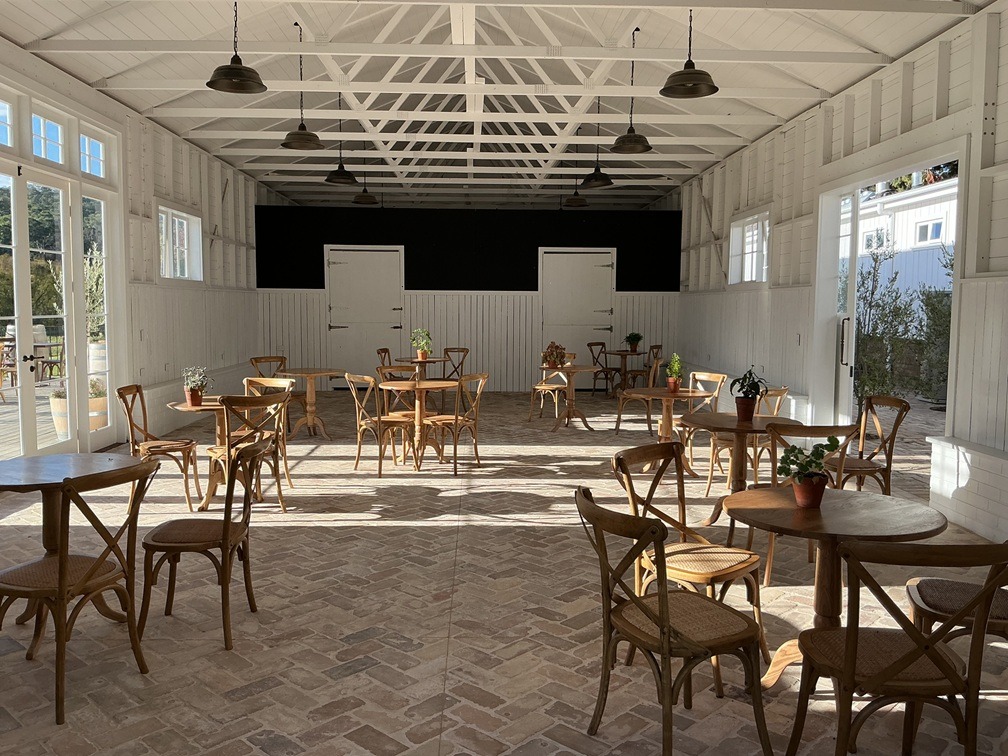

There's a particular kind of project brief that starts with an existing building rather than an empty site, and it changes almost everything about how the project has to be led. New construction gives a design team a blank canvas and a known set of unknowns — soil conditions, services connections, the usual list. Adaptive reuse gives a design team a building that already has a structure, a history, and a set of problems nobody has fully diagnosed yet, and asks them to make it work for a purpose it was never built for.
The appeal is obvious, and it's real. A retained building carries the character of a place in a way new construction can't manufacture. On a precinct-scale development — several buildings, several uses, staged over years — the retained structures are often what make the whole thing feel like it belongs where it sits, rather than having been dropped onto the land. That's not a sentimental point. It's a commercial one too: on agritourism and hospitality projects especially, the authenticity of a working farm building doing farm-adjacent work is part of what visitors are actually paying for.
The harder part is everything underneath that appeal. Adaptive reuse is, almost without exception, more design effort and more construction judgement than starting fresh — and a meaningfully higher tolerance for the unknowns that only reveal themselves once the works actually begin. A wall that looked sound in the assessment turns out not to be. A structure built for one use resists compliance with the code requirements of another. Staging construction around a building that has to stay weathertight, or stay open, while it's being reworked is a different discipline to staging a new build on a clear site.
None of that is a reason to avoid it. It's a reason it needs a particular kind of client-side leadership. Every one of those unknowns becomes a decision — keep this wall or replace it, absorb this cost or trim scope elsewhere, hold the completion date or accept the delay — and on a project running over years, those decisions come one at a time, often under time pressure, and they compound. The principal isn't in every meeting where the decision actually gets made. Someone has to be holding their vision in the room consistently enough that the fiftieth decision is as aligned with the brief as the first one was, even though the fiftieth decision was never explicitly discussed at the start.
That's the real argument for treating adaptive reuse as its own discipline within project leadership, not a variant of standard delivery with a few extra risks bolted on. The buildings that get this right don't read as retrofits. They read as though they were always meant to be used this way — which is, in a sense, exactly what good adaptive reuse is: making the harder path invisible in the result.